
1 hr 30 min
Triana & Guadalquivir River Walking Tour
Intimate small-group exploration of Seville's most authentic quarter and its legendary river
Reserve

Kiln smoke on the west bank, guitar strings after dark
Hand-picked by our editors — only the best 5 experiences from 118 reviewed.
Verified partners for every tour, free cancellation where available, and instant confirmation on every booking.
1 hr 30 min
Intimate small-group exploration of Seville's most authentic quarter and its legendary river
Reserve
2 hr
Discover Seville's iconic monuments and vibrant history on an intimate 2-hour walk with a local guide
Reserve
1 hr
Experience passionate flamenco artistry in its historic birthplace overlooking the Guadalquivir River
ReservePrices from verified partners. Availability updates in real time at checkout. Free cancellation policies apply where shown.
The landmarks, rooms, and views travelers on this tour remember — all visible on a single visit.
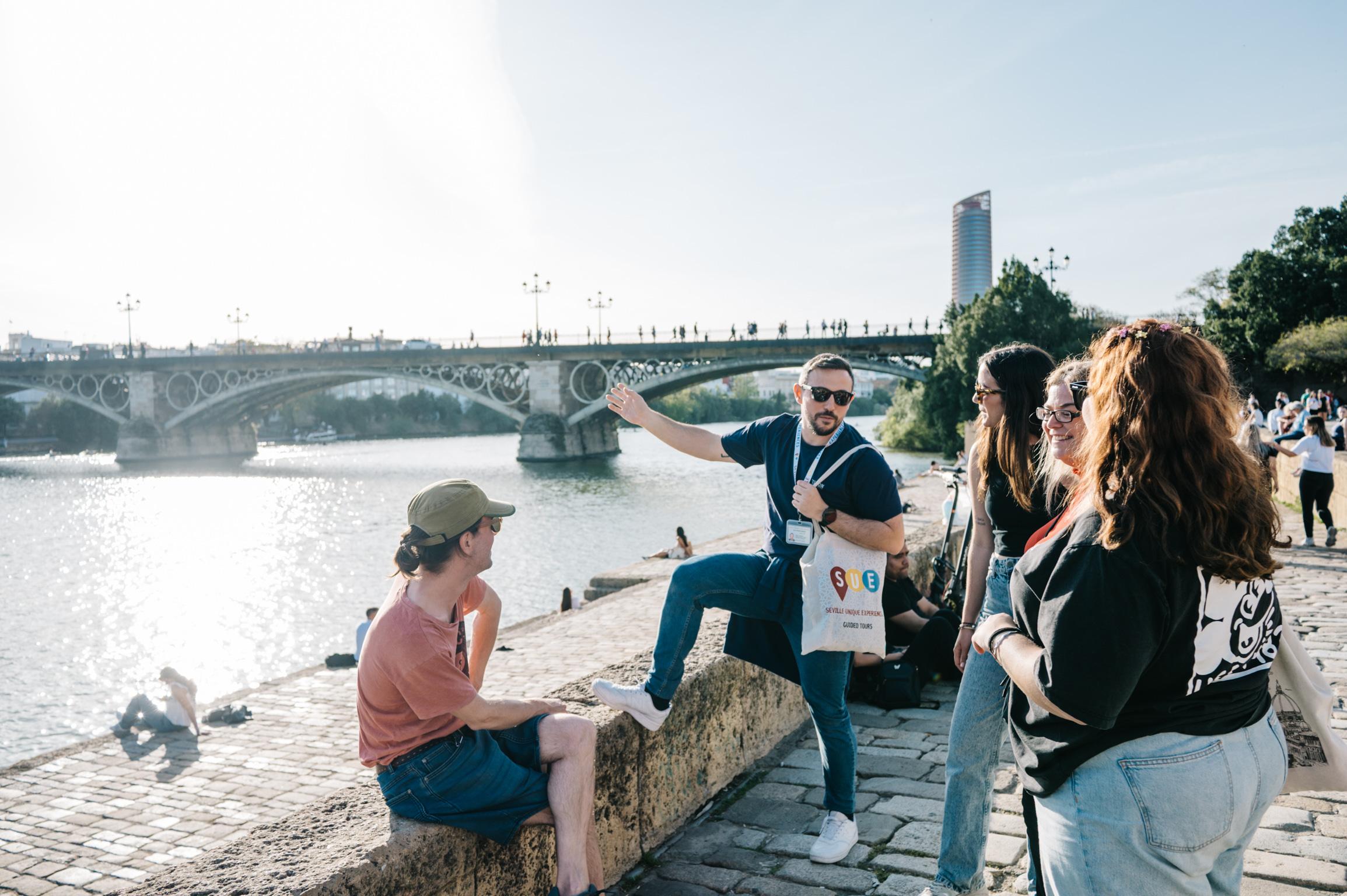
This iron bridge connects the district to the city center and serves as the gateway for your walking tour triana seville. It was completed in 1852 and remains a landmark.
Known as the oldest church in the district, founded in 1276. It features significant architectural elements from the Mudéjar period.
Located above the ruins of an ancient castle, this market offers local food and produce. It is a central hub for those taking a walking tour triana seville.
This riverfront street offers some of the best views of the city skyline. It is the perfect place for evening photography during a walking tour triana seville.
This center highlights the rich history of pottery making in the area. It showcases the craftsmanship essential to the identity of the district.
They complement each other; most visitors who do both find the Triana neighborhood more authentic while Barrio Santa Cruz offers a more concentrated dose of medieval charm.
| Feature | Top pick Triana District | Barrio Santa Cruz |
|---|---|---|
Primary Focus |
Ceramics and local workshops | |
Crowd Levels |
Moderate to low | |
Architectural Style |
Traditional residential and industrial | |
Local Atmosphere |
Authentic neighborhood spirit | |
Navigation Difficulty |
Straightforward grid layout | |
| See tickets → |
Verdict: Select the walking tour triana seville tour for a relaxed look at artisan heritage, or choose the Santa Cruz walking tour triana seville tours for dense, winding historical streets that require no walking tour triana seville tickets to explore.
Choose your ticket, select your date, and reserve in under two minutes. Secure checkout handled by our verified partner.
Instant confirmation by email, with a mobile voucher you can save offline. No printing, no queuing at a collection desk.
Arrive at the entrance, show your voucher on your phone, and walk in. Most tickets include priority or skip-the-line access.
Best time to go, insider tips, nearby landmarks, and the cancellation fine print — flip through to skim what matters to you.
How crowds, weather, and events shift across the year.
Mild temperatures make this ideal for long walking tours. Floral displays enhance the local aesthetic.
Expect high temperatures; morning visits are highly recommended. Local life moves to evening hours.
The current season offers pleasant weather for exploring. Crowds are moderate compared to peak spring.
Generally mild with occasional rain. The district remains festive and quiet during these months.
Small details that turn a good visit into a great one.
Visit between 09:00–18:00 to ensure ceramic shops are open. This window is optimal for a walking tour triana seville experience.
Wear flat shoes to handle the historic street layout. High heels are discouraged for this walking tour triana seville.
Use the river as a landmark to orient yourself. The area is easily explored on foot without a guide.
Tapas bars often get crowded late. Arrive early for a more relaxed dining experience.
The district is free to enter, but carry small cash for artisan shops. Many smaller vendors prefer cash payments.
Non-bookable sights within a short walk — free to visit, easy to pair.
A historic military watchtower overlooking the river. Built in the 13th century.
The historic bullring located just across the river. Known for its Baroque architecture.
Built atop the ruins of Castillo de San Jorge. Features local food stalls.
Flexible, no hidden fees.
Cancellation terms depend on the specific provider booked through this platform. Please review individual walking tour triana seville tour vouchers for refund eligibility.
Hand-picked options within walking distance — pick a district for vibe, or a specific hotel for convenience.
Traditional neighborhood lodging options available.
Range of luxury and boutique hotels near the river.
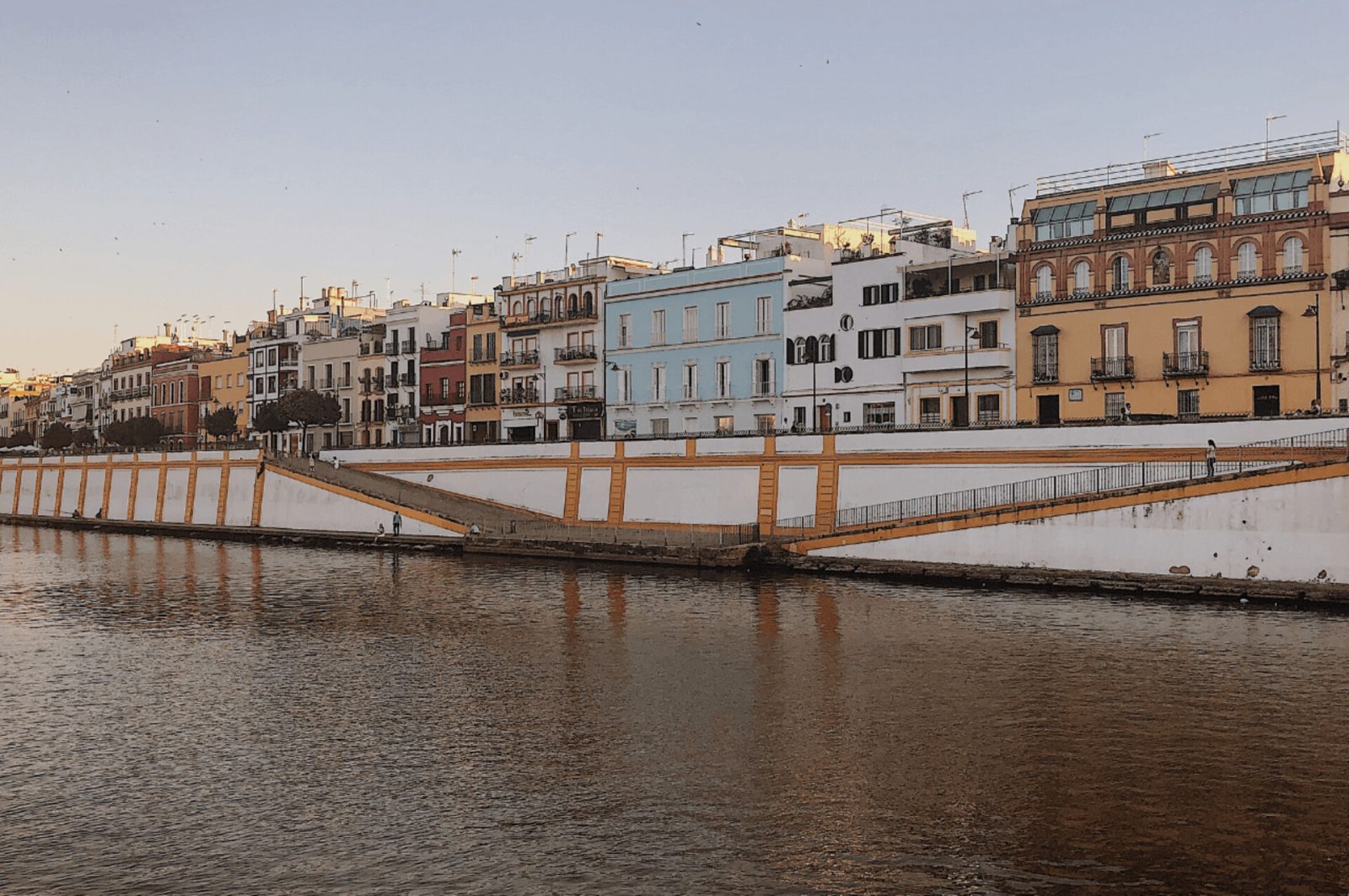
For more than seven centuries, the potters of Triana dug clay from the west bank of the Guadalquivir and fired it in wood-burning kilns a few streets from the water. The district sat outside Seville's walls, reachable only by a pontoon of moored boats until the Puente de Isabel II opened in 1852. That isolation shaped everything. Guides who run walking tour triana seville tours still trace the old parish boundaries, because Triana measured itself against the city rather than within it. Ceramics remain the clearest signature. Azulejos — tin-glazed tiles whose technique arrived with Al-Andalus — face shopfronts, doorways and street signs along Calle Alfarería and Calle Antillano Campos, where workshops still sell pieces fired on site. The Centro Cerámica Triana, built into the surviving kilns of the Santa Ana factory, holds the furnaces themselves. Nearby, the Mercado de Triana occupies the footprint of the Castillo de San Jorge, the castle that housed the Spanish Inquisition's tribunal from 1481. Fish stalls now stand over its excavated foundations. The neighbourhood also exported people. Rodrigo de Triana sighted land from the Pinta in October 1492; crews for Magellan's circumnavigation were mustered from these quays. The Capilla de los Marineros, home to the Esperanza de Triana, keeps that maritime devotion active, and its Holy Week brotherhood crosses the bridge each Good Friday morning to a crowd that fills both banks. Flamenco's domestic lineage runs here too: the Gypsy corrales of Calle Pagés del Corro produced dancers and cantaores whose families are still named on plaques. Today the contrast is architectural as much as cultural. Calle Betis presents an unbroken riverfront of ochre, oxblood and whitewashed façades, while two streets inland the lanes narrow to shoulder width. The Giralda and the Torre del Oro, the two Seville landmarks most often photographed from this bank, belong to the other side of the water. A Seville Triana walking tour — una ruta a pie por Triana, in local phrasing — reads the district as one text: river, kilns, chapel, market. That grammar is legible on foot and nearly invisible from a car. Any walking tour triana seville tour worth the name therefore ends where the Guadalquivir does the explaining, with the smell of frying fish crossing Plaza del Altozano. Entry to the neighbourhood costs nothing, and its streets stay open 00:00–23:59, seven days a week.
"Triana measured itself against Seville rather than within it."
Public streets are accessible, though historic cobblestones exist. Plan your walking tour triana seville with footwear suited for walking.
Photography is permitted throughout the area. Capture the vibrant local culture during your walking tour triana seville.
A typical visit varies, but you should allocate several hours to enjoy the sites. Adjust your walking tour triana seville duration based on your interest in shops.
The district is located at Triana District, 41010 Seville, Spain. It is easily reachable by walking tour triana seville routes from the city center.