
English| EUR
Suggested for you
More currencies
Choose a language
Seville rewards pedestrians more than almost any Spanish city of comparable size, yet its layout defeats anyone navigating by straight lines. This page maps the centro histórico de Sevilla as walkers actually meet it: the continuous core around the Giralda and the Real Alcázar, the alleys of Barrio Santa Cruz, the cobblestones that punish thin soles. It also marks the point where covering a Seville walking tour on foot stops being the obvious choice.
Quick answer
Yes. Seville's historic centre is almost entirely walkable, and exploring it costs nothing — entry to the general city centre area is free. Listed hours run 09:30–18:30, seven days a week, so monuments rather than streets set the schedule. The constraint is climate, not distance: heat and narrow, crowded afternoon lanes make the 09:30–11:30 arrival window the sensible one.
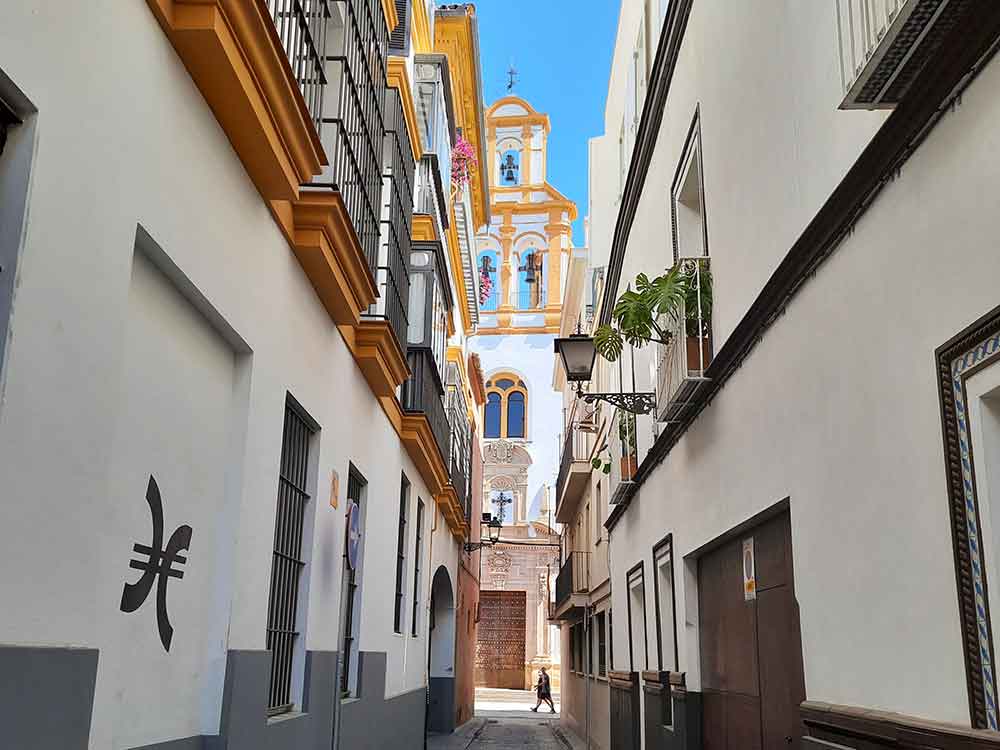
Seville's old town ranks among the largest surviving historic quarters in Western Europe, and almost none of it was drawn for wheels. Moorish lanes, Christian plazas and nineteenth-century arcades sit on top of one another with no grid to tidy them. Is Seville a walkable city? The useful answer has little to do with kilometres and a great deal to do with how those streets behave underfoot. Nearly every landmark a first-time visitor has heard of sits inside the same loop. The Seville Cathedral and the Giralda face the Real Alcázar across a single square. The Archivo de Indias stands between them. Barrio Santa Cruz begins at the Alcázar wall and unspools into alleys barely wide enough for two people, which is why maps mislead and corners surprise. North along Calle Sierpes the shopping streets are closed to traffic; south, Avenida de la Constitución carries only the tram. Plaza de España and the Parque de María Luisa sit a short stroll beyond, and the Guadalquivir waterfront links the Torre del Oro to Triana over the Puente de Isabel II. A Seville walking tour of the casco antiguo rarely needs transport at all — the centro histórico de Sevilla is one continuous pedestrian surface interrupted by the occasional delivery van. Two things complicate the picture. The first is surface: marble slabs, granite setts and glazed tile are slick after rain and unforgiving in thin soles. The second is shade. Narrow northern alleys stay cool past noon, while open spaces like Plaza Nueva and the Metropol Parasol esplanade offer almost none. Experienced guides route visitors along the shaded side and schedule the broad plazas for late afternoon. So the practical reading of is seville a walkable city is yes, with conditions: plan a loop rather than a list, keep the Seville landmarks that need timed entry at the front of the day, and treat the river as the natural boundary. Guided and self-guided walking routes build on exactly that logic, and the sections below cover hours, arrival and accessibility in detail.
“The honest answer has little to do with kilometres and a great deal to do with how those streets behave underfoot.”
To walk the Seville city centre comfortably, prioritize the spring or autumn shoulder seasons to avoid the extreme summer heat. The best arrival window is 09:30–11:30 to avoid mid-day heat and peak afternoon crowds in narrow historic streets.
Pleasant temperatures (15°C–25°C). Ideal for walking city routes before summer heat arrives.
Very hot temperatures (35°C–40°C+). Limit walking to early morning or late evening hours.
Mild temperatures (16°C–28°C). This season offers stable weather suitable for extended walking tours.
—
Arriving during the 09:30–11:30 window ensures cooler air and fewer crowds in the narrow streets.
Verdict: The optimal time to walk the city centre is weekday mornings between 09:30–11:30 during the months of April or October.
The historic city centre of Seville is a public space accessible to all pedestrians without cost. Navigating the streets and plazas requires no admission tickets.
Verdict: A typical adult pays 0 EUR to walk through the city centre, though specific interior monuments may carry their own entry fees.
The Seville City Centre remains accessible for exploration throughout the week, maintaining consistent operational hours daily. Visitors can plan their walking routes during these standardized times to navigate the historic streets.
Seville City Centre presents a blend of accessible main plazas and challenging historic infrastructure. While many central routes are flat, the presence of cobblestones and narrow passages in older districts requires careful planning for mobility aids.
Main thoroughfares are paved, but historic streets often feature uneven cobblestones and narrow passages.
Major sites and central squares are generally accessible, though some older areas contain unavoidable curbs.
Visit during the recommended window of 09:30–11:30 to avoid peak crowds in narrow lanes.
Seville City Centre is situated in the historic heart of the city at 41001 Seville, Spain. Navigating the area is most effectively done on foot due to the dense network of narrow streets.
Renfe Cercanías to Sevilla-Santa Justa
Line 1 to Puerta Jerez
TUSSAM lines to Paseo de Colón
Direct to Avenida de la Constitución
To integrate seamlessly with a walking-first itinerary, plan your arrival for the best arrival window of 09:30–11:30. This approach helps you avoid mid-day heat and peak afternoon crowds in the narrow historic streets.
Everything you need to know about is seville a walkable city
Yes, the historic core is very compact and pedestrian-friendly, making it an excellent destination for those exploring on foot. Most major landmarks are situated within a comfortable distance of one another.
The most efficient way to see the sights is through a planned Seville walking tour. This allows you to navigate the narrow cobblestone streets while learning about the rich history of the Andalusian capital.
The medieval layout of the city features narrow, winding streets that naturally calm traffic and prioritize pedestrian movement. This dense urban design confirms that is seville a walkable city for most visitors.
We recommend planning your exploration for the morning hours between 09:30 and 11:30. Arriving during this window helps you avoid the intense mid-day heat and peak afternoon crowds.
Families often find that is seville a walkable city due to the many plazas and traffic-restricted zones. However, parents should keep in mind that the historic pavement can be uneven for strollers in some older sections.
While the city is highly accessible, the primary challenge is the summer climate and the complexity of the ancient street grid. Planning your route in advance and staying hydrated ensures a pleasant experience when evaluating is seville a walkable city.